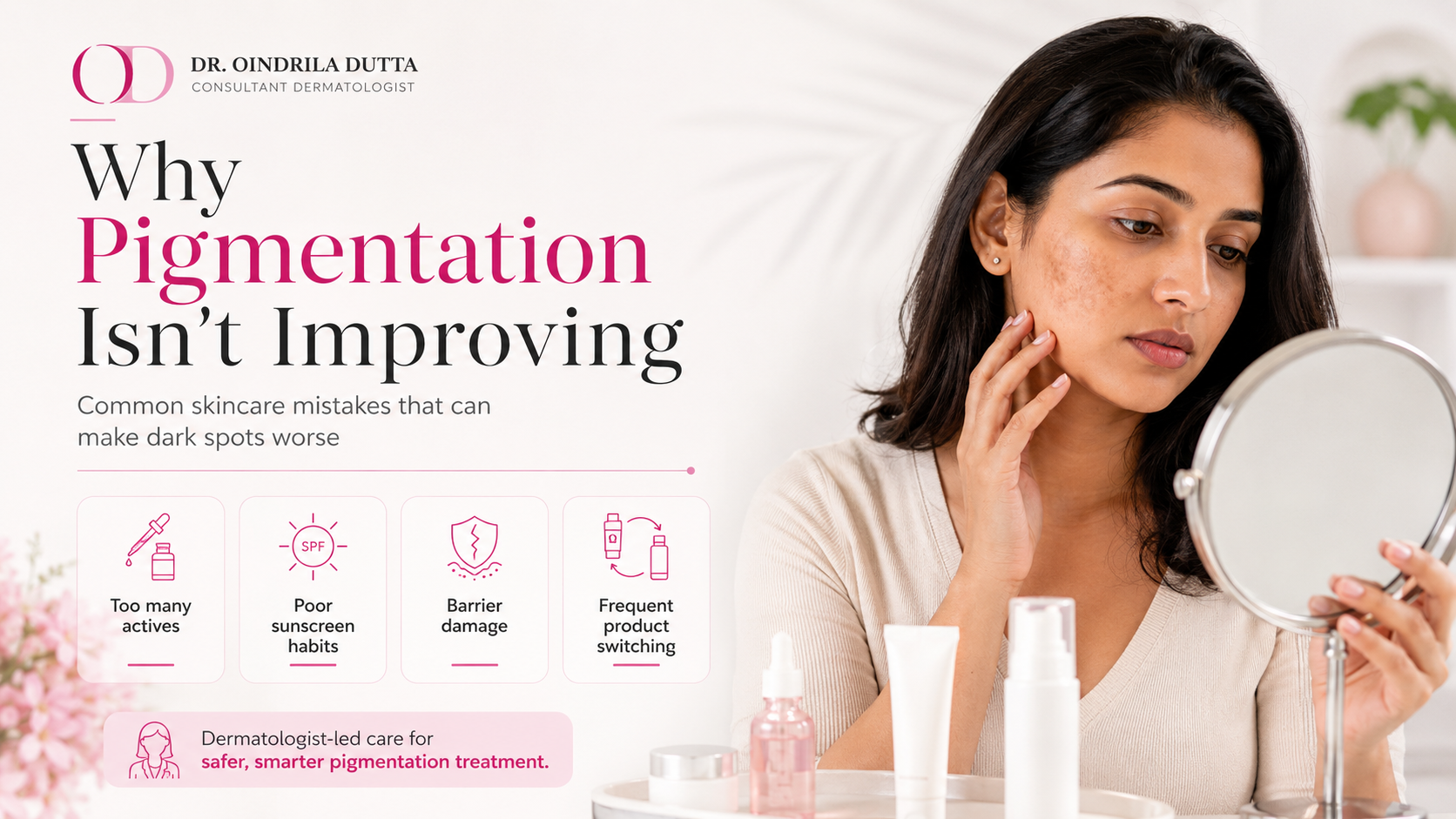
Pigmentation can be confusing, especially when your routine feels consistent and well-planned. You may be using good products and following advice carefully, yet the results don’t match your expectations. Sometimes, the skin looks unchanged—or even slightly darker.
This is a concern many people share when they visit a skin treatment clinic in Kolkata. The surprising part is that pigmentation is not always about doing too little. In many cases, it is about doing too much or choosing what does not suit your skin.
With the right guidance from a Skin specialist in Kolkata, it becomes easier to understand where small adjustments can make a meaningful difference.
Why Does Pigmentation Persist Despite Regular Skincare?
It can feel frustrating when effort does not reflect in results.
Pigmentation is influenced not only by products but also by how your skin reacts to them. Even well-intentioned routines can sometimes create imbalance.
A few common patterns include:
- Overloading the skin with multiple products
- Changing routines frequently
- Inconsistent sun protection
- Overlooking early signs of irritation
When the skin becomes stressed, it may respond by producing more pigment. This response is more noticeable in Indian skin, which is naturally more reactive to inflammation.
Is Using Too Many Active Ingredients Affecting Your Skin?
Active ingredients can be helpful, but balance is important.
When too many strong ingredients are used together, the skin barrier may become compromised. This can lead to:
- Increased sensitivity
- Redness or irritation
- Uneven tone
- Darker patches over time
Instead of improving clarity, the skin becomes reactive.
At a well-guided skin treatment clinic in Kolkata, routines are often simplified first. This helps the skin regain balance before introducing targeted treatments.
Are Popular Skincare Trends Always Suitable for Pigmentation?
Not necessarily.
Many trending routines are designed for general use and may not consider individual skin needs. Pigmentation, however, is rarely straightforward.
Your skin is influenced by:
- Weather conditions
- Daily habits
- Hormonal factors
- Sensitivity levels
Following a routine without understanding these factors can overload your skin.
Consistency with a suitable routine is more effective than frequently trying new approaches.
Does Sun Exposure Play a Bigger Role Than You Think?
Yes, and often more than expected.
Sun exposure is one of the strongest triggers for pigmentation. Even minimal exposure can stimulate melanin production, making dark patches more visible.
Without proper protection, pigmentation can:
- Deepen gradually
- Take longer to fade
- Return after improvement
Helpful habits include:
- Applying sunscreen daily
- Reapplying when needed
- Using protective accessories outdoors
Sun protection supports every other treatment you use.
Why Do New Products Sometimes Make Pigmentation Look Worse?
This can happen due to skin irritation.
When the skin reacts to a product, inflammation may develop. This can temporarily make pigmentation appear darker.
Common reasons include:
- Strong exfoliation
- Combining incompatible ingredients
- Introducing products too quickly
Instead of switching products again, it is often better to pause and allow the skin to stabilise.
How Can You Tell If Your Skin Barrier Needs Support?
Your skin often signals when something is not right.
Signs to notice include:
- Tingling or burning sensation
- Uneven redness
- Sudden dryness or oiliness
- Breakouts after new products
- Dark spots appearing after irritation
A weakened skin barrier makes pigmentation more difficult to manage. Strengthening it is an important first step toward improvement.
What Approach Works Best for Treating Pigmentation?
Pigmentation varies from person to person.
It may be linked to:
- Sun exposure
- Acne-related marks
- Hormonal influences
- Skin sensitivity
This is why treatment should always be tailored.
A qualified Skin specialist in Kolkata evaluates the skin to understand the type and depth of pigmentation before suggesting a plan.
Depending on the concern, options may include:
- Laser toning for gradual pigment control
- Chemical peels for surface-level correction
- Combination treatments for balanced results
The aim is steady, safe improvement over time.
Can Simple Home Remedies Sometimes Do More Harm Than Good?
In certain cases, yes.
Some natural ingredients may irritate the skin when used frequently or incorrectly.
Common concerns include:
- Citrus ingredients causing sensitivity
- Rough scrubs affecting the skin barrier
- DIY mixtures leading to unpredictable reactions
Irritation can increase pigmentation instead of reducing it.
Keeping your routine simple and consistent often works better.
How Can You Reset a Routine That Is Not Working?
The skin has a strong ability to recover when given the right support.
A few practical steps include:
- Reducing unnecessary products
- Avoiding frequent experimentation
- Focusing on hydration and repair
- Using sunscreen consistently
- Allowing time for the skin to respond
Seeking guidance from a trusted skin treatment clinic in Kolkata can help you rebuild your routine in a safe and effective way.
When Small Changes Lead to Real Skin Improvement
Pigmentation does not always need aggressive correction. In many cases, it improves when the skin is supported, not stressed.
When your routine becomes more balanced, your skin begins to respond better.
At Dr. Oindrila Dutta’s clinic, care is focused on understanding each patient’s skin before suggesting solutions. Treatments are planned with clarity, keeping long-term skin health in mind.
If your pigmentation is not improving despite your efforts, a thoughtful evaluation can help you move forward with more confidence and less guesswork.
FAQs
Is it okay to use multiple active ingredients for pigmentation?
Using multiple actives without guidance can overwhelm your skin. This may increase irritation and worsen pigmentation. A simplified, dermatologist-guided routine is usually safer.
Can home remedies alone improve pigmentation?
Home remedies may offer mild benefits, but results are inconsistent. Some ingredients can irritate the skin. Professional guidance ensures a safer and more reliable approach.
How long does pigmentation take to improve?
Improvement is gradual. With the right routine and sun protection, changes are usually noticeable within a few weeks, but consistency is key.
Can pigmentation return after it improves?
Yes, if triggers like sun exposure or irritation continue. Maintenance care helps keep results stable over time.
Is sunscreen necessary even if I stay indoors?
Yes. Light exposure indoors can still affect your skin. Daily sunscreen use helps prevent pigmentation from worsening.
Should I stop all products if my skin reacts?
Not completely. It is better to simplify your routine and focus on gentle care. Consulting a Skin specialist in Kolkata can help you adjust safely.
Ready to Transform Your Skin Health?
Take the first step towards a radiant, healthy skin with expert care from Dr. Oindrilla Dutta. Book your consultation today and discover personalized solutions for all your dermatological needs!

Recent Post
-
 October 07, 2026
Skin Looking Dull & Dehydrated? Know What Skin Boosters Can Do
-
 September 28, 2026
Why Does My Ingrown Toenail Keep Coming Back After Surgery?
-
 September 21, 2026
Not Every Raised Scar Is a Keloid: Know the Difference