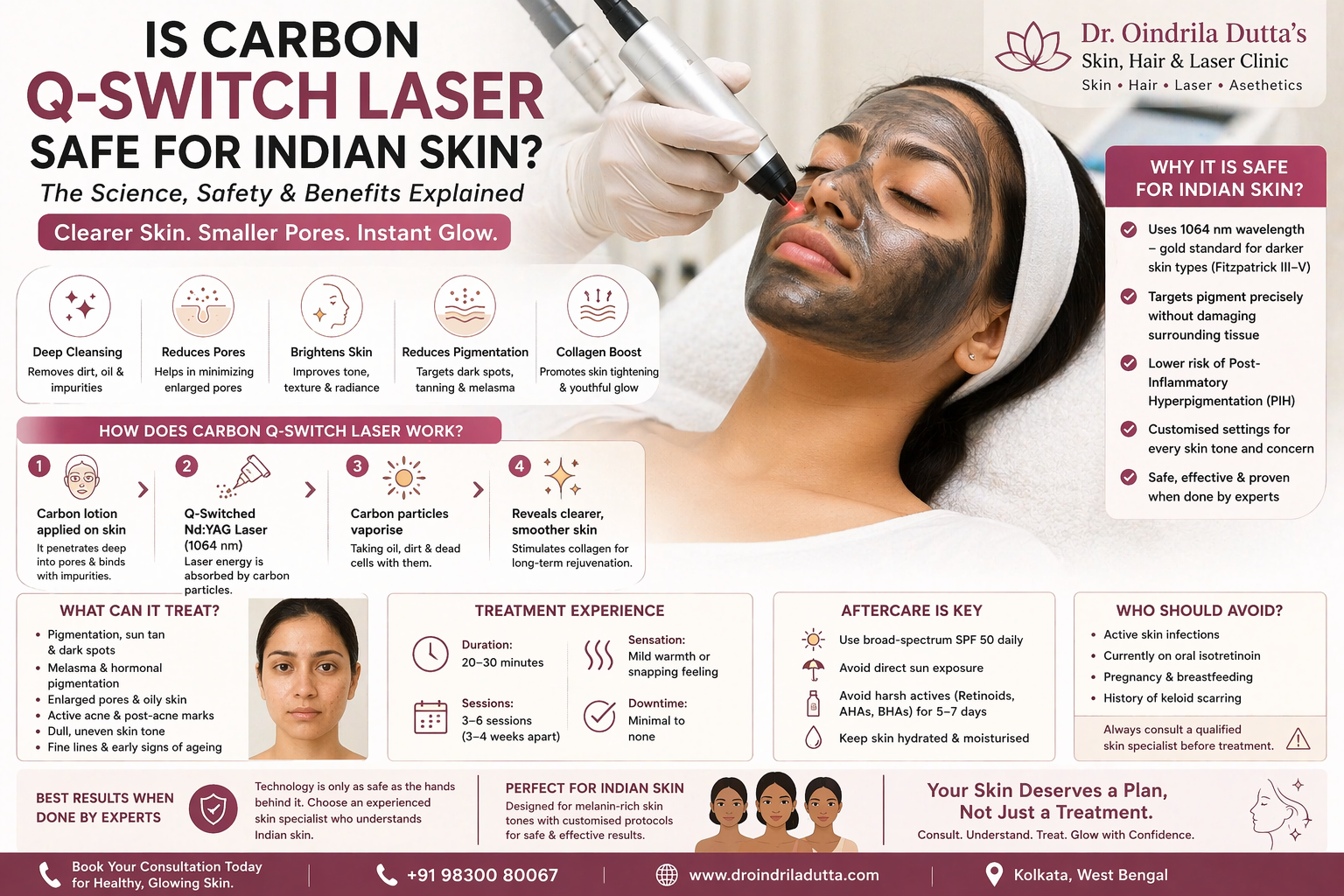
Walk into any skin clinic in India today and you will likely hear about the Carbon Q-Switch Laser — also popularly known as the Hollywood Carbon Peel or Carbon Laser Facial. It promises clearer pores, reduced pigmentation, and an instant glow. But for those of us with warm, melanin-rich Indian skin tones, the first question is always: Is this actually safe for my skin?
It is a fair concern. Historically, many laser technologies were designed with lighter Fitzpatrick skin types in mind. But the Carbon Q-Switch Laser is different — and understanding why requires a quick look at the science behind it.
What Is the Carbon Q-Switch Laser?
The Carbon Q-Switch Laser is a two-step treatment. First, a thin layer of medical-grade carbon lotion is applied to the skin's surface. This carbon seeps into the pores and binds to oil, dead cells, and surface debris. Then, a Q-Switched Nd:YAG laser — most commonly at a wavelength of 1064 nm — is passed over the skin.
The laser energy is selectively absorbed by the carbon particles, which then vaporise — taking with them the impurities trapped inside your pores. The controlled thermal energy also stimulates collagen production in the deeper dermal layers, resulting in gradual skin tightening, reduced pore size, and a more even complexion over time.
The result? Cleaner pores, better skin texture, and a visible radiance — usually with zero downtime.
Why Indian Skin Needs a Different Approach
Indian skin typically falls between Fitzpatrick Types III and V — meaning it contains a higher concentration of active melanocytes. While this naturally protects against UV damage, it also makes the skin more reactive to aggressive treatments. The primary risk with poorly calibrated laser protocols on darker skin is Post-Inflammatory Hyperpigmentation (PIH) — essentially, the skin darkening as a response to heat or injury.
So, why is the Q-Switch laser different?
At a wavelength of 1064 nm, it selectively targets melanin deposits and pigmented cells without causing indiscriminate heat damage to the surrounding tissue — which is exactly why it is considered the gold standard for Indian skin tones. The risk of PIH is significantly lower compared to other laser technologies, when the treatment is done correctly.
And that last part matters more than most people realise. Laser parameters — energy levels, pulse duration, spot size — must be calibrated individually for your skin type and concern. A protocol designed for fair skin can absolutely cause harm on deeper Indian skin tones. The technology is only as safe as the hands and clinical judgment behind it.
What Concerns Can It Address?
For Indian skin specifically, the Carbon Q-Switch Laser works well across a range of concerns that are particularly common in our climate and population:
- Hyperpigmentation, sun tanning, and dark spots
- Melasma and hormone-induced pigmentation
- Enlarged, clogged pores (especially common in humid climates)
- Active acne and post-acne marks
- Dull, uneven skin tone caused by pollution and sun exposure
- Early signs of ageing — fine lines and loss of skin radiance
For those exploring skin rejuvenation treatments in Kolkata — where heat, humidity, and pollution are daily skin stressors — the Carbon Q-Switch Laser can be a particularly effective option when recommended as part of a broader skin care plan.
What Does a Typical Treatment Look Like?
Each session is relatively quick — usually between 20 and 30 minutes — and most people describe the sensation as a mild warmth or a faint snapping feeling, similar to a rubber band flicked against the skin. No anaesthesia is required, though a numbing cream can be applied beforehand for sensitive individuals.
You may notice a slight redness immediately after, which typically settles within a few hours. Most people return to their routine the same day. The number of sessions recommended varies — for general skin brightening, 3 to 4 sessions spaced 3 to 4 weeks apart is a common starting point. For deeper pigmentation concerns like melasma, more sessions may be advised.
After the Treatment
Aftercare is where many people undermine their own results. Sunscreen — a broad-spectrum SPF 50 — is non-negotiable after any laser session on Indian skin. Avoiding direct sun exposure, skipping harsh actives like retinoids or AHAs for at least a week, and keeping the skin well-moisturised all play a significant role in outcomes and safety.
Who Should Avoid It?
While the Carbon Q-Switch Laser is broadly safe, it is not the right choice for everyone at every point in time. It is generally not recommended during active skin infections, for those currently on oral isotretinoin, during pregnancy, or for individuals with a history of keloid scarring. A thorough skin evaluation before any treatment is essential — this is not a step to skip.
Any good skin doctor in Kolkata will begin with a proper consultation, assess your skin type, review your medical history, and only then design a treatment plan. Avoid clinics that offer a one-size-fits-all laser package without a pre-treatment assessment.
The Honest Answer: Yes, But Context Matters
The Carbon Q-Switch Laser is one of the safest laser technologies available for Indian skin — provided the right wavelength is used, parameters are calibrated for your specific skin tone, and post-care is followed diligently. It is not a risky treatment when approached with expertise and precision. It becomes risky only when administered by someone without the clinical knowledge to adapt it for melanin-rich skin.
If you have been searching for a skin specialist in Kolkata who understands the nuance of treating Indian skin — not just the technology — the starting point should always be a consultation, not a booking.
Your Skin Deserves a Plan, Not Just a Treatment
Every skin is different — and Indian skin, with all its nuance, deserves more than a generic laser protocol picked off a menu. The Carbon Q-Switch Laser is a genuinely safe and effective treatment, but only when it is part of a thoughtfully designed plan built around your skin tone, your concerns, and your lifestyle.
If you have been looking for a dermatologist in Kolkata who combines clinical precision with a patient-first approach, the first step is always a conversation — not a commitment.
Book a consultation with Dr. Oindrila Dutta and find out exactly what your skin needs, and what it doesn't.
Frequently Asked Questions
1. Is Q-Switch laser safe for dark Indian skin tones?
Yes. The Q-Switch Nd:YAG laser at 1064 nm is specifically suited to deeper skin tones because it targets pigment in the lower dermis without causing significant surface damage. When calibrated correctly by a trained dermatologist, it carries a low risk of post-inflammatory hyperpigmentation — the primary concern for darker skin types.
2. How many sessions of Carbon Q-Switch Laser are needed for visible results?
For general skin brightening and pore refinement, most individuals see a visible improvement within 3 to 4 sessions, spaced 3 to 4 weeks apart. For deeper concerns like melasma or post-acne pigmentation, 6 to 8 sessions may be recommended. The exact number depends on your skin concern, depth of pigmentation, and individual skin response.
3. Can the Carbon laser peel worsen pigmentation?
If the treatment parameters are not adjusted for Indian skin types, or if sun protection is neglected post-treatment, there is a risk of temporary darkening or PIH. However, this risk is significantly minimised when the procedure is performed by a qualified dermatologist using appropriate settings, followed by proper aftercare including high-SPF sunscreen.
4. Is there any downtime after a Carbon Q-Switch Laser session?
In most cases, there is little to no downtime. You may experience mild redness or a slight flushed sensation for a few hours post-treatment, but this typically resolves quickly. Most patients return to their daily activities the same day. Avoiding sun exposure and refraining from using active skincare ingredients for a few days is advised.
5. What is the difference between Carbon Laser Peel and Q-Switch Laser?
The Carbon Laser Peel (Hollywood Peel) uses a Q-Switch laser as its core technology — they are not two separate treatments. The carbon lotion applied to the skin acts as an enhancer, helping the laser work more precisely at the surface level to exfoliate, clean pores, and improve skin tone. The Q-Switch laser on its own can also be used for deeper pigmentation treatment and tattoo removal without the carbon layer.
Ready to Transform Your Skin Health?
Take the first step towards a radiant, healthy skin with expert care from Dr. Oindrilla Dutta. Book your consultation today and discover personalized solutions for all your dermatological needs!

Recent Post
-
 October 07, 2026
Skin Looking Dull & Dehydrated? Know What Skin Boosters Can Do
-
 September 28, 2026
Why Does My Ingrown Toenail Keep Coming Back After Surgery?
-
 September 21, 2026
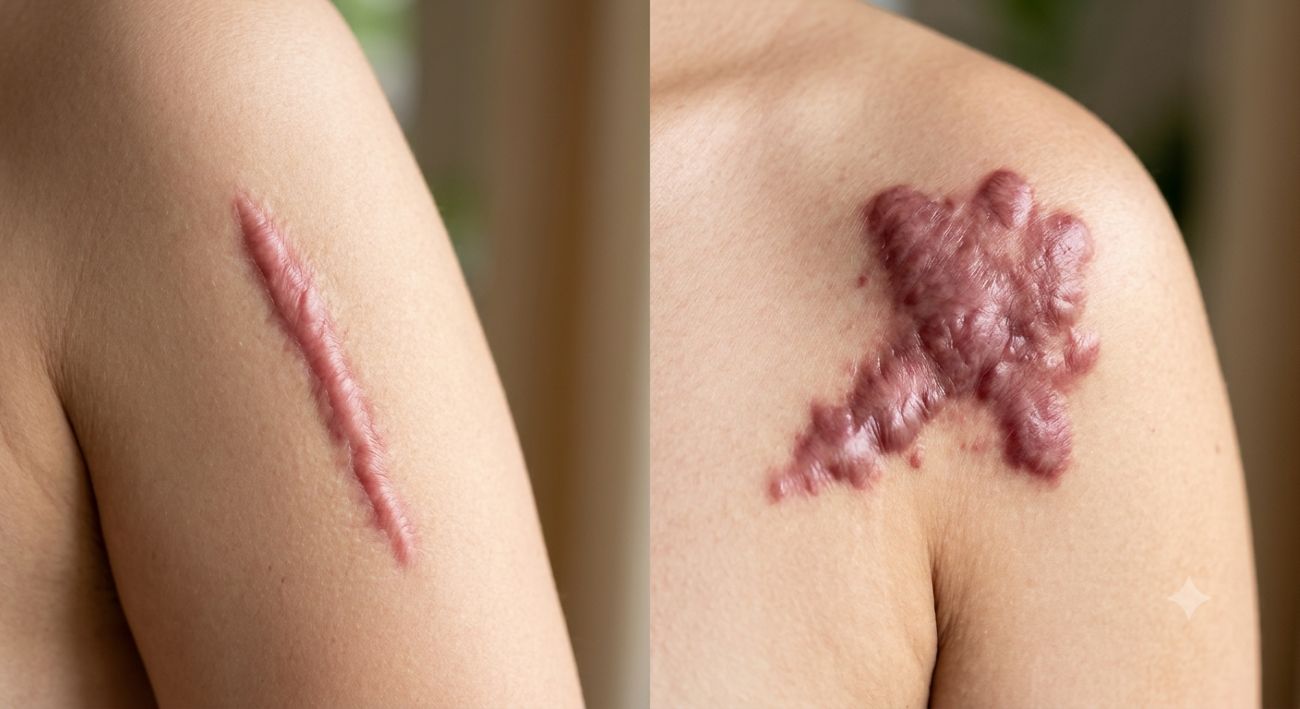
Not Every Raised Scar Is a Keloid: Know the Difference