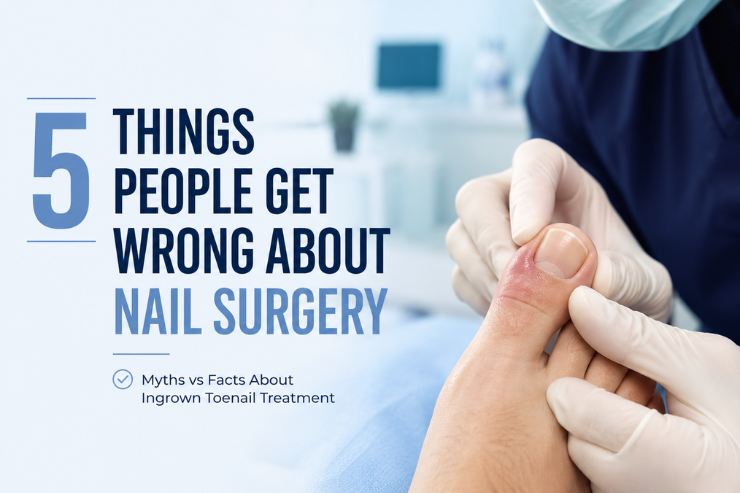
If your toe has been throbbing for weeks and you're still Googling instead of booking an appointment, you're not alone. Most people delay nail surgery not because it's a bad option, but because of what they think it involves. Somewhere along the way, a fairly simple, well-established dermatological procedure picked up a reputation it doesn't deserve.
The truth is far simpler, gentler, and quicker than the stories floating around forums and group chats. Below are the five things people get wrong most often and what actually happens once you sit in the chair.
Myth 1: Losing Your Entire Nail
This is the fear that stops most people from even asking a doctor about it. The mind jumps straight to a bare, nail-less toe forever.
- In most cases, only the small problem edge is trimmed away, not the whole nail
- Complete nail removal is rare and reserved for very specific, severe cases
- The rest of your nail stays exactly where it is, untouched
- Once healed, the toe looks neat, not "operated on"
- A partial fix is usually all it takes to end the pain for good
Myth 2: It Is Too Painful to Handle
Pain fear keeps this on the "I'll deal with it later" list for years. But the procedure doesn't happen the way people imagine.
- A numbing injection is the only part that feels like anything and it's over in seconds
- Once numb, you'll feel pressure or tugging, never sharp pain
- Mild soreness for a day or two afterward is normal and easy to manage
- It's honestly far less painful than living with a throbbing toe every single day
- Waiting out of fear of pain usually means more pain in the long run, not less
Myth 3: The Nail Never Grows Back
People picture a permanently missing or oddly shaped nail. This one worry alone stops many from getting help.
- If only part of the nail is removed, it grows back looking completely normal
- If the root is treated (for nails that keep coming back problematic), only that narrow strip stops regrowing, the rest of the nail is unaffected
- New nail growth is usually visible within a few weeks
- Full regrowth can take a few months, and most patients say it looks better than before
| Type of Procedure | What Regrows |
| Partial nail removal | Nail grows back fully and normally |
| Root (matrix) treatment | Only the treated edge doesn't regrow; rest is normal |
Myth 4: Home Remedies Are Safer
This is the one that causes the most damage. Home fixes feel productive, but they rarely solve the actual problem.
- Soaking, cutting the edge yourself, or tucking cotton underneath only relieves pressure for a short while
- Digging at an ingrown nail at home often pushes the problem deeper and invites infection
- An infection left untreated can spread well beyond the toe
- There's a real difference between calming the pain and treating the cause
- If you have diabetes or poor circulation, home treatment is genuinely risky and best avoided
- If the redness, swelling, or pus keeps returning, that's your sign to stop waiting
Myth 5: Recovery Takes Too Long
The image of weeks on crutches or missed workdays keeps this procedure low on people's priority list but recovery is usually much shorter than expected.
- Most patients walk out the same day and get back to light activity right away
- Mild swelling or tenderness for a few days is normal
- Regular, comfortable footwear can usually be worn again within a week or so
- Full healing of the skin takes about 7 to 10 days, with complete nail regrowth taking longer in the background while you carry on with life
- Keeping the area clean and dry speeds things up more than anything else
- The longer you wait to treat it, the longer the actual discomfort drags on
Ingrown Nail or Something Else?
Foot pain isn't always what people assume it is. Here's a quick way to tell conditions apart before deciding what you're dealing with.
| Condition | Main Sign | What It Feels Like |
| Ingrown toenail / paronychia | Redness and swelling at the nail edge | Sharp, localised pain when pressed |
| Blister | Fluid-filled bump from friction | Stings when touched, no nail involvement |
| Fungal nail | Thick, yellow, or crumbly nail | Usually painless, worsens slowly over time |
| Gout | Sudden swelling, often at the big toe joint | Intense, throbbing pain, sometimes with warmth or fever |
If the pain is centred right at the edge of your nail and keeps returning, it's very likely an ingrown nail or paronychia and that's exactly what nail surgery is designed to fix.
Myth vs Fact At A Glance
| Myth | Fact |
| Entire nail is removed | Only the problem edge, in most cases |
| It's extremely painful | Numbing makes it nearly pain-free |
| Nail never grows back | Regrows normally after partial removal |
| Home remedies are safer | They manage pain, not the actual cause |
| Recovery takes weeks | Most resume activity the very same day |
These are the same doubts that come up again and again on Reddit threads, Facebook groups, and even in chats with AI tools when people search for answers before visiting a clinic.
Stop Waiting, Start Healing Today
Nail pain that keeps coming back deserves a proper diagnosis, not another home remedy. A qualified dermatologist can tell you within minutes whether you're dealing with an ingrown nail, a fungal infection, or something else entirely, and guide you toward the right, minimally invasive fix.
If you're in Kolkata and searching for nail surgery in Kolkata or simply want an experienced skin doctor in Kolkata to take a look, Dr. Oindrila Dutta is a well-recommended dermatologist in Kolkata for exactly this kind of care.
Frequently Asked Questions
Q1) Is nail surgery only for severe or old, neglected cases?
No. It helps with anything from a first-time ingrown nail to a nail that keeps recurring, at any age.
Q2) Can I just keep cutting the ingrown part myself instead?
You can trim gently at home for very mild cases, but if it keeps coming back or looks infected, self-treatment usually makes it worse, not better.
Q3) Will I need to take time off work?
Most people return to desk jobs the next day. Physically active jobs may need a day or two of rest.
Q4) Does nail surgery leave a visible scar?
Scarring is minimal to none in most cases, since only a small strip of tissue is treated.
Q5) How do I know if it's an ingrown nail and not a fungal infection?
Ingrown nails hurt right at the edge and look red or swollen. Fungal nails are usually painless but look thick, yellow, or crumbly. A dermatologist can confirm this in a single visit.
Ready to Transform Your Skin Health?
Take the first step towards a radiant, healthy skin with expert care from Dr. Oindrilla Dutta. Book your consultation today and discover personalized solutions for all your dermatological needs!

Recent Post
-
 October 07, 2026
Skin Looking Dull & Dehydrated? Know What Skin Boosters Can Do
-
 September 28, 2026
Why Does My Ingrown Toenail Keep Coming Back After Surgery?
-
 September 21, 2026
Not Every Raised Scar Is a Keloid: Know the Difference