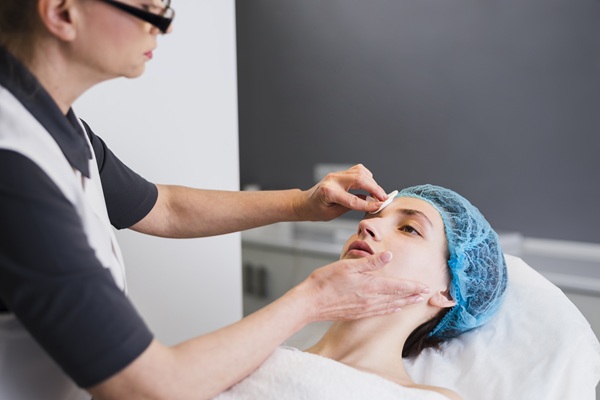
Acne scars are like bad exes — they don’t leave easily unless treated right.
Your acne may have faded, but the scars it left behind can be more stubborn than the breakouts themselves. From pitted marks to post-inflammatory pigmentation, these reminders affect our confidence, beyond the skin. As your trusted dermatologist in Kolkata, hear me when I say — true skin recovery goes beyond creams and facials. It’s about understanding the science behind acne scar treatment and choosing the option that works best for your skin type.
The Science of Acne Scars: Why They Form
Acne scars form when inflammation damages the skin’s deeper layers. When acne lesions penetrate deep into the skin, they disrupt collagen fibers. As the skin heals, it sometimes produces too little collagen (causing depressions) or too much (causing raised scars).
Common Types of Acne Scars
- Ice pick scars: Deep and narrow pits that extend into the dermis.
- Boxcar scars: Broad depressions with sharp edges.
- Rolling scars: Wave-like undulations caused by fibrous tissue bands.
- Post-inflammatory hyperpigmentation (PIH): Dark spots left after acne heals (technically not a scar but often treated similarly).
The key to acne scar removal for face is matching the right technology to the right scar type—no single treatment works for everyone.
Dermatologist-Approved Acne Scar Treatments That Actually Work
Each acne scar type requires a different medical approach. Here’s what modern dermatology offers:
1. Laser Resurfacing (Fractional CO₂ or Er:YAG Lasers)
These lasers stimulate collagen remodeling by creating microthermal zones on the skin.
- Best for: Deep boxcar or rolling scars
- Benefits: Smooths texture, evens tone, and boosts natural collagen
- Downtime: 3–5 days of mild redness and flaking
2. Microneedling and RF Microneedling
Tiny needles create controlled micro-injuries that trigger collagen repair. RF microneedling adds radiofrequency energy for enhanced results.
- Best for: Mild-to-moderate scars
- Benefits: Improves elasticity and skin firmness over time
- Downtime: Minimal (1–2 days of mild redness)
3. Chemical Peels
Dermatologist-grade peels (like TCA or glycolic acid) exfoliate damaged top layers and encourage new cell turnover.
- Best for: Superficial scars and post-acne pigmentation
- Benefits: Brightens skin and fades discoloration
- Downtime: Peeling for 2–3 days
4. PRP (Platelet-Rich Plasma) Therapy
PRP uses growth factors from your own blood to accelerate skin healing and enhance collagen formation. Often paired with microneedling for better results.
- Best for: Atrophic and mixed-type scars
- Benefits: Natural, regenerative, and safe for most skin tones
5. Subcision
A minor in-clinic procedure where a fine needle breaks the fibrous bands pulling down the scar.
- Best for: Rolling or tethered scars
- Benefits: Lifts depressions and restores smoothness
Combination Therapy: The Gold Standard for Acne Scar Removal
With years of experience as a dermatologist & dermatosurgeon in Kolkata, I have found that combination therapy is most effective for visible improvement.
Subcision with RF microneedling or laser resurfacing — each technique addresses a different layer of the scar—surface texture, pigment, and collagen structure. The results are smoother, more uniform skin tone and texture.”
For deeper or older scars, 3–6 sessions spaced a few weeks apart may be recommended for optimal results.
What to Expect During Acne Scar Treatment
| Stage | What Happens | Typical Duration |
| Consultation | Skin analysis & scar mapping | 15–30 mins |
| Treatment Session | Laser, microneedling, or PRP procedure | 30–60 mins |
| Downtime | Mild redness or flaking | 1–5 days |
| Results | Gradual collagen remodeling | Visible in 4–8 weeks |
Pro Tip: Always follow a dermatologist’s post-procedure care routine—sunscreen, hydration, and gentle skincare can make or break your results.
At-Home Skincare for Scar Prevention
While in-clinic procedures are crucial for existing scars, everyday habits make the progress easier:
- Never pick or squeeze acne lesions.
- Use non-comedogenic products suited to your skin type.
- Apply broad-spectrum sunscreen (SPF 30+) daily.
- Incorporate mild exfoliants (like lactic acid or niacinamide) 2–3 times a week.
- Stay consistent—skin remodeling takes time.
Your Skin Remembers How to Heal
Every mark tells a story of your skin’s resilience. With the right blend of dermatological care and patience, those stubborn acne scars can soften—both in texture and in how they make you feel. Science has come a long way, and your skin deserves that progress.
Just remember, Healing Skin Takes Time — and the Right Care.
If you want more than just ‘fixing flaws,’ connect with me, Dr. Oindrila Dutta, your trusted dermatologist in Kolkata, to create a treatment plan that respects your skin’s history and its potential to heal.
FAQs About Acne Scar Treatment
Yes, with the right parameters and dermatologist supervision. Techniques like microneedling and PRP are safe even for Indian skin tones.
Most patients see noticeable results after 3–4 sessions, depending on scar depth and skin response.
Complete removal may not always be possible, but significant texture and pigment improvement (70–90%) is achievable with combination therapy.
Natural remedies may lighten pigmentation slightly but cannot remodel scar tissue like medical treatments do.
If scars have persisted for over six months, or you notice new textural irregularities despite using over-the-counter products.
Ready to Transform Your Skin Health?
Take the first step towards a radiant, healthy skin with expert care from Dr. Oindrilla Dutta. Book your consultation today and discover personalized solutions for all your dermatological needs!

Recent Post
-
 October 07, 2026
Skin Looking Dull & Dehydrated? Know What Skin Boosters Can Do
-
 September 28, 2026
Why Does My Ingrown Toenail Keep Coming Back After Surgery?
-
 September 21, 2026
Not Every Raised Scar Is a Keloid: Know the Difference