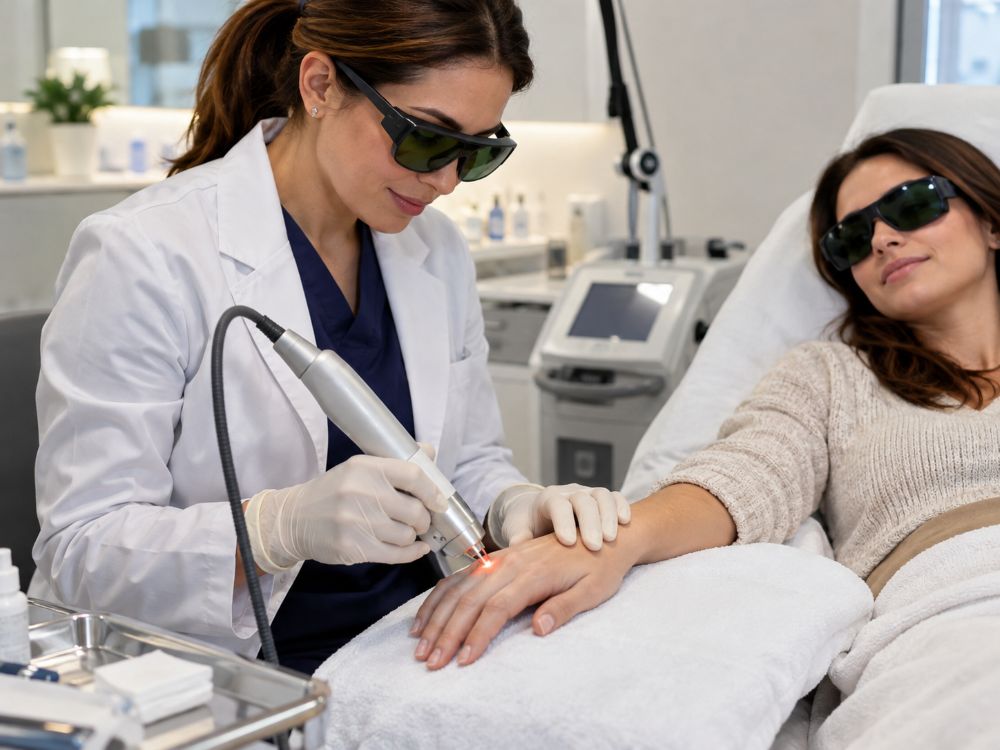
A wart that keeps coming back is tiring, and the thought of a laser can add worry about safety and pain. In short: laser wart removal is a clinical procedure done by a dermatologist; the discomfort is usually manageable, side effects are mostly short-term, and healing takes one to two weeks. This guide explains pain, side effects, and recovery so you can decide with clear information. Individual results vary from person to person.
How Does the Laser Work on a Wart?
Warts are skin growths caused by a virus called human papillomavirus (HPV). In this treatment, focused light is used on the wart. Two types of lasers are commonly used:
| Laser type | How it works |
| Pulsed dye laser | Targets the tiny blood vessels that feed the wart |
| CO2 laser | Removes wart tissue in thin layers |
- The dermatologist picks the type after checking the wart type, size, location, and your skin tone.
- A session usually takes 15 to 30 minutes.
Is Laser Treatment Safe For Warts?
Laser treatment is an established procedure in dermatology. Safety depends on the doctor's training, the clinic setup, and a proper check-up before the procedure.
- The light acts mainly on the wart and its blood supply, with limited effect on nearby skin.
- Local numbing is used. General anaesthesia is usually not needed.
- Most cases need no cut, which may lower infection risk compared with surgery.
At a clinic offering Clinical Dermatology in Kolkata, the doctor first confirms that the growth is a wart and not another skin condition. This check matters because moles and other growths can look similar.
Does Laser Wart Removal Hurt?
Some discomfort is expected, and it is usually manageable. Patients often describe:
- A quick snap or sting with each pulse, like a rubber band flick
- More sensitivity on the soles than on the hands or face
To keep you comfortable, numbing cream is applied 20 to 30 minutes before the session. A local anaesthetic injection may be used for larger or sensitive warts.
According to research, about 1 in 4 patients in one clinic review reported severe pain during laser treatment, which is why pain control is planned. Pain tolerance differs from person to person.
Side Effects of Laser Wart Removal
| Common (short-term) | Less common | Higher risk in |
| Redness and swelling for 24 to 72 hours | Scarring, which is rare when aftercare is followed | Darker skin tones |
| Mild tenderness for a day or two | Colour change that lasts longer, and usually fades with time | Active skin infection near the site |
| Small blister or scab, part of healing | Infection, which is rare with proper aftercare | Diabetes or low immunity, where healing may be slower |
| Temporary darker or lighter skin, more common in darker Indian skin tones | Wart not fully removed, especially deep plantar (sole) warts, which may need another session | Skipped aftercare instructions |
A check by a dermatologist in Kolkata before the procedure helps plan treatment around these risks. Individual experience varies from person to person.
Laser Wart Removal Recovery: What to Expect
Healing happens in stages. Here is a simple day-by-day guide.
Day 1 to Day 3
- Redness, mild swelling, and tenderness are normal
- A scab or blister may form. Please do not pick it
- Keep the area clean and dry, and apply the ointment as advised
Day 4 to Day 7
- The scab dries and falls off on its own. Do not force it
- Mild itching is common. Avoid scratching
- Many patients return to regular activities in this period
Week 2 and Beyond
- Colour changes begin to fade over weeks to months
- Sun protection matters, especially in Kolkata’s year-round sun
- A follow-up visit checks healing and whether another session is needed
- Healing time varies with wart size, location, skin type, and aftercare
How Many Sessions May Be Needed?
There is no fixed number before the check-up. It depends on the wart type, size, depth, and how your skin responds. Surface warts often respond in 1 to 2 sessions, while deep or stubborn warts may need 3 or more, spaced several weeks apart. Individual requirements vary, and the number cannot be guaranteed upfront.
Aftercare That Supports Your Wart Removal Healing
| Do | Avoid |
| Keep the area clean and dry | Picking or peeling the scab |
| Apply the ointment as advised | Swimming or soaking the area |
| Use sunscreen daily | Direct sun on healing skin |
Call your doctor if you notice unusual swelling, spreading redness, pus, or very slow healing.
Who Should Avoid Laser Wart Removal?
Your doctor may advise waiting, or another method, if:
- You are pregnant
- Have An active skin infection near the wart
- A pigmentation condition that needs careful review
- Medicines that make skin sensitive to light
Very deep skin tones need extra care with laser settings. A consultation with a skin specialist in Kolkata helps find out what suits you.
How to Choose a Safe Wart Removal Clinic
If you are looking for a wart removal clinic in South Kolkata, check the doctor’s training and the clinic setup before the location.
- Treatment by a qualified dermatologist
- A clean, sterile clinic setting
- A consultation before any procedure
- Clear aftercare instructions and an honest talk about sessions and results
Be careful with offers of guaranteed removal in one session, or very low prices without a consultation.
Safe Removal Starts with the Right Assessment
Laser treatment is an established option for warts. Pain is usually manageable, side effects are mostly temporary, and recovery is usually smooth with good aftercare. Outcomes differ from person to person.
A visit to a skin treatment clinic in Kolkata can help identify the wart type, check skin suitability, and explain your options, so the decision stays with you.
Author:
Dr. Oindrila Dutta
Consultant Dermatologist and Dermatosurgeon
MBBS (Gold Medalist)
MD in Dermatology
International Fellowship in Aesthetic & Laser Dermatology (DIAS, ASI-Australia)
FAQs
1. Will the wart come back after laser treatment?
Sometimes. Warts come from a virus, so they can return even after removal. In one clinic review, about 1 in 3 patients noticed regrowth. Your dermatologist can explain follow-up and ways to lower the chance.
2. How long does healing take after the procedure?
Healing time varies from person to person and often takes one to two weeks. The scab often falls off by itself within about a week. Colour changes can take weeks to months to fade. Timing varies with wart size, location, skin type, and aftercare.
3. Can laser treatment cause scarring?
Scarring is uncommon but possible. The risk depends on wart depth, laser settings, skin type, and aftercare. Picking the scab raises the chance of a mark. Your dermatologist can discuss this before the procedure.
4. Is laser treatment safe for children?
It may be considered in selected cases. The doctor looks at the child's age, wart type, and comfort during the procedure, and may suggest other options first. Parents are involved in every decision.
5. What does wart removal with laser cost in Kolkata?
The cost varies with the number and size of warts, their location, the laser type, and the number of sessions. The fee is explained clearly after the doctor examines the area.
Disclaimer: This content is for general educational purposes only and does not constitute medical advice. Individual results may vary. Please consult your treating doctor for a personalised assessment before starting any treatment.
Ready to Transform Your Skin Health?
Take the first step towards a radiant, healthy skin with expert care from Dr. Oindrilla Dutta. Book your consultation today and discover personalized solutions for all your dermatological needs!

Recent Post
-
-
 October 17, 2026
Can Acne Scar Treatment Make Indian Skin Darker?
-
 October 07, 2026
Skin Looking Dull & Dehydrated? Know What Skin Boosters Can Do