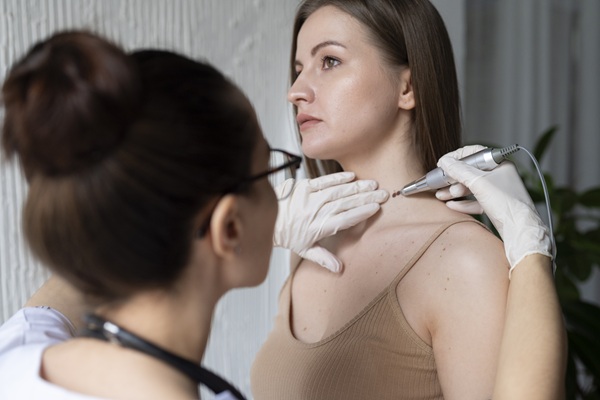
That small bump on your skin has been sitting there for a while now. You keep looking at it. Is it a wart? A mole? A skin tag? They all look similar but they are not the same thing, and they do not need the same care.
Getting this wrong often leads to the wrong treatment, unnecessary worry, or worse trying to remove it at home and causing more harm than good.
This blog will help you understand the difference clearly, so you know what you are dealing with, and when to seek a proper assessment.
Individual results and skin conditions vary. Please consult a qualified dermatologist for a personalised evaluation.
Three Growths, Three Different Stories
Before anything else, here is a quick side-by-side look:
| Feature | Wart | Mole | Skin Tag |
| Cause | Viral infection (HPV) | Pigment cells clustering | Skin friction or folds |
| Texture | Rough, raised, grainy | Smooth or slightly raised | Soft, hangs off skin |
| Colour | Skin-coloured, grey, or brown | Brown, black, or pink | Skin-coloured or slightly darker |
| Common locations | Hands, feet, fingers | Anywhere on the body | Neck, underarms, eyelids, groin |
| Contagious? | Yes, spreads through contact | No | No |
| Painful? | Can be, especially on feet | Usually not | Usually not, unless rubbed |
What Is a Wart — And Why It Needs Attention
A wart is caused by the human papillomavirus (HPV). It enters the skin through tiny cuts or breaks and causes an overgrowth of skin cells.
Key things to know:
- Warts are contagious, they can spread to other parts of the body or to other people through shared towels, razors, or direct contact
- They are rough to touch and may have tiny black dots in the centre, these are small blood vessels
- Common on hands and fingers, but plantar warts appear on the soles of the feet and can be quite painful
- They do not go away on their own in most cases and tend to multiply if left untreated
Warts are one condition where waiting and watching is generally not advisable, especially if they are spreading or in a visible area.
What Is a Mole — And When Should You Be Concerned?
Moles are clusters of pigment-producing cells in the skin. Most people have several moles and most are completely harmless.
What a normal mole looks like:
- Round or oval shaped
- Even colour like brown, black, or skin-toned
- Smooth edges
- Usually smaller than 6mm, about the size of a pencil eraser
- Present from birth or appearing in childhood and early adulthood
When to get a mole evaluated:
Dermatologists use a simple guide called the ABCDE rule:
| Letter | What to Check |
| A - Asymmetry | One half looks different from the other |
| B - Border | Edges are uneven, blurred, or jagged |
| C - Colour | More than one colour or uneven shading |
| D - Diameter | Larger than 6mm or growing |
| E - Evolution | Any change in size, shape, colour, or new symptoms |
If any of these apply to a mole on your skin, please do not ignore it. A clinical assessment at a skin treatment clinic in Kolkata is always the right step.
What Is a Skin Tag — And Is It Harmless?
Skin tags are soft, small, flesh-coloured growths that hang off the skin by a thin stalk. They are extremely common and are not a sign of any serious health condition.
They tend to appear where:
- Skin rubs against skin - neck, underarms, groin
- Clothing or jewellery causes repeated friction
- There have been hormonal changes, weight gain, or ageing
Skin tags are not contagious and not dangerous. However, they can:
- Get caught on clothing or jewellery and bleed
- Cause irritation or discomfort in skin fold areas
- Affect confidence when on visible areas like the face or neck
Those seeking skin tag removal in Jodhpur Park or across south Kolkata often come in simply because the growth has become uncomfortable or is bothering them, both are valid reasons to consider a proper evaluation.
A Simple Self-Check Guide at Home
Not sure what you are looking at? These three quick checks can point you in the right direction before a clinic visit:
| Question | If Yes, It Could Be |
| Is it rough and grainy to touch, with a cauliflower-like surface? | Wart |
| Does it hang off the skin on a thin stalk and move slightly? | Skin Tag |
| Does it sit flat or slightly raised, with an even colour and smooth edge? | Mole |
| Has it appeared at a site of previous injury or broken skin? | Likely Wart |
| Has it been there since childhood or early adulthood without changing? | Likely Mole |
| Does it appear in a skin fold, crease, or friction area? | Likely Skin Tag |
This is a guide for general awareness and not a substitute for a clinical diagnosis. A skin doctor in Kolkata can confirm what it is accurately after proper assessment.
Can You Remove Them at Home? Honestly, No
This comes up very often in practice. There are many home remedies suggested online like apple cider vinegar, dental floss, freezing kits, nail clippers.
Here is the concern with all of them:
- Risk of infection: the skin around a mole or wart is sensitive and can get infected easily
- Incomplete removal: especially for warts, removing only the surface does not address the root, and they come back
- Scarring: uncontrolled cutting or burning at home almost always leaves a mark
- Misdiagnosis risk: what looks like a harmless mole may need clinical evaluation before any removal
Under clinical dermatology in Kolkata, removal is done using safe, targeted methods like cryotherapy, electrocautery, or laser based on what the growth actually is, where it is located, and your skin type.
What Does Removal Actually Involve?
Most removals are quick, outpatient procedures done under local anaesthesia. Here is a general idea:
| Growth | Common Removal Method | Downtime |
| Wart | Cryotherapy or electrocautery | Minimal, a few days |
| Mole | Laser or surgical excision | 5 to 7 days depending on size |
| Skin Tag | Electrocautery or laser | 1 to 3 days |
Recovery is generally straightforward. Mild redness or scabbing at the treated area is normal and settles on its own with proper aftercare.
Those looking for a wart removal clinic in south Kolkata, it is worth knowing that the method used depends on the type, size, and location of the growth, which is why a consultation and proper diagnosis always come first.
Aftercare — What to Do Once It Is Removed
Recovery is generally straightforward but how the area is cared for afterwards matters.
Do’s:
- Keep the treated area clean and dry
- Change dressings as advised by your doctor
- Apply any prescribed ointment regularly
- Protect the area from sun exposure, especially after mole removal
- Attend your follow-up appointment without skipping it
Avoid:
- Picking, scratching, or rubbing the treated spot
- Applying makeup or skincare products on the area until it has healed
- Swimming or soaking the area in water during early recovery
- Tight clothing or jewellery over the treated site
If the area looks unusually red, swollen, or is not healing as expected then contact your dermatologist in Kolkata rather than waiting for your scheduled follow-up.
Your Skin Deserves a Proper Answer
A growth on the skin is not always cause for concern. Most warts, moles, and skin tags are harmless and manageable with proper care. The ones worth paying attention to are those that change, spread, or simply refuse to stay the same.
If there is any doubt about what is on your skin or if it is changing, growing, or bothering you, consulting a qualified skin doctor in Kolkata is always the right move. A proper clinical assessment clarifies what the growth actually is, whether it needs treatment, monitoring, or simply being left alone.
When in doubt, a skin evaluation is always a reasonable first step, not because something is necessarily wrong, but because knowing is always better than guessing.
Author:
Dr. Oindrila Dutta
- Consultant Dermatologist and Dermatosurgeon
- MBBS (Gold Medalist)
- MD in Dermatology
- International Fellowship in Aesthetic & Laser Dermatology (DIAS, ASI-Australia)
Frequently Asked Questions
Q1. Can a wart, mole, or skin tag turn into something serious?
Most are harmless. However, moles that change in size, shape, or colour need clinical evaluation. Warts, if left untreated, can spread. Any growth that bleeds, itches, or changes suddenly should be assessed by a skin doctor in Kolkata. Individual presentations vary.
Q2. How do I know if my mole needs to be removed or just monitored?
Not every mole needs removal. If it is stable, symmetrical, and not changing; monitoring is usually sufficient. However, any mole showing the ABCDE signs warrants a proper clinical assessment before any decision is made.
Q3. Will there be a scar after wart, mole, or skin tag removal?
The risk of scarring depends on the size, depth, location, and method used. Modern dermatological procedures aim to minimise scarring significantly. A dermatologist in Kolkata assesses each case individually before recommending the most suitable approach. Results vary from person to person.
Q4. Is skin tag removal covered under health insurance in India?
Skin tag removal is generally considered a cosmetic procedure and is typically not covered under standard health insurance plans in India. However, if a growth is causing medical symptoms, it is worth checking with your insurer. Consult your treating doctor for clarity on your specific case.
Q5. Can warts spread to family members living in the same house?
Yes, warts are caused by a virus and can spread through direct contact or shared items like towels, razors, or footwear. Prompt evaluation and treatment by a qualified dermatologist in Kolkata is advisable to reduce the risk of spread within the household.
Disclaimer: This content is for general educational purposes only and does not constitute medical advice. Outcomes vary between individuals. Please consult your treating doctor for a personalised assessment before starting any treatment.
Ready to Transform Your Skin Health?
Take the first step towards a radiant, healthy skin with expert care from Dr. Oindrilla Dutta. Book your consultation today and discover personalized solutions for all your dermatological needs!

Recent Post
-
 October 07, 2026
Skin Looking Dull & Dehydrated? Know What Skin Boosters Can Do
-
 September 28, 2026
Why Does My Ingrown Toenail Keep Coming Back After Surgery?
-
 September 21, 2026
Not Every Raised Scar Is a Keloid: Know the Difference