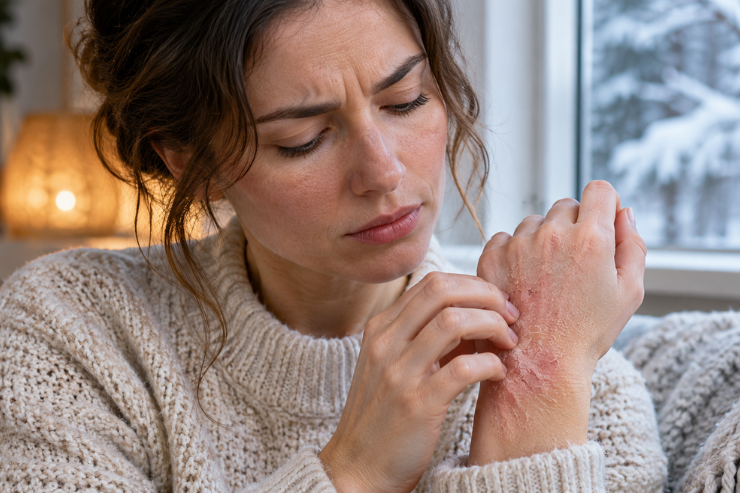
Every winter, it starts again. Moisturiser goes on in the morning, but by evening the skin feels tight, itchy, and the hands or elbows begin to crack. Many people brush this off as normal dryness. Sometimes it is. But when the itch disturbs sleep or the same patches return each year, it may be eczema. This blog explains how to tell the difference, what helps at home, and when to seek help. Every skin is different, so a diagnosis matters.
Signs Your Winter Dryness May Be Eczema
Eczema, also called atopic dermatitis, is a condition where the skin’s protective barrier is weaker. It loses moisture faster and reacts more easily. Regular winter dryness usually settles with moisturising, but eczema tends to linger and return.
Signs that point beyond simple dryness:
- Itching that wakes you at night
- Red, dark, or greyish patches
- Cracks that sting or bleed
- Thick, rough skin from repeated scratching
- The same spots flaring every winter
On Indian skin, eczema often looks dark brown or grey rather than red, so it is easy to miss. A family history of asthma or allergies can also make it more likely.
Dry Skin, Eczema or Fungal Rash: How to Tell
After the humid months, these three are often confused.
| Sign | Dry Skin | Eczema | Fungal Rash |
| Itching | Mild | Moderate to intense, worse at night | Intense, often with burning |
| Look | Rough, flaky | Inflamed, dark or red, may crack or ooze | Ring-shaped, raised edges, clearer centre |
| Common areas | Legs, arms, hands | Elbow and knee folds, hands, neck, face | Groin, waist, underarms, thighs |
| Spreads to others? | No | No | Yes |
| Moisturiser helps? | Usually | Partly | No |
Worth remembering: Eczema and fungal rashes need very different care. The wrong cream can make either one worse. A quick look can give clues, but confirming the cause is a doctor's role.
Why Eczema Flares Up in Kolkata Winters
According to research, cold, dry weather weakens the skin's barrier and raises the chance of eczema flares. Daily winter habits can add to this.
Common triggers:
- Hot water baths: Comforting on cold mornings, but they strip natural oils
- Woollen clothes: Rough fibres rub against sensitive skin
- Hard or chlorinated water: Can leave skin tight after bathing
- Strong soaps and detergents: Fragrance and residue irritate the skin
- Drinking less water: Thirst drops in winter
- Festive stress and late nights: Can make flares more likely
A note on mustard oil: It is a part of many Bengali homes. It suits some people but may irritate eczema-prone skin. Watch how your skin responds.
If your skin also feels dull and rough this season, this guide on why skin looks dull even after skincare explains how the skin barrier works.
Is It Safe to Use a Chemist Cream for Eczema?
When the itch gets bad, it is natural to pick up a cream from the nearby chemist. Some of these contain steroids, sometimes mixed with other medicines, and are used without knowing the cause of the rash.
Risks of using them without a diagnosis:
- Thin skin on the face, eyelids, or skin folds with repeated use
- Flares that return, sometimes worse, once the cream is stopped
- Needing stronger creams over time to get the same relief
- Making the rash worse if it is actually a fungal infection
Steroid creams are not “bad”. When prescribed in the right strength, for the right area and for the right duration, they are a useful part of eczema care. The concern is self-medication, not the medicine itself.
What Actually Helps Eczema Skin at Home?
| Do | Avoid |
| Lukewarm baths of 5 to 10 minutes | Long, hot baths |
| Mild, fragrance-free cleanser | Strong or scented soaps |
| Moisturise within 3 minutes of bathing | Waiting until skin feels dry again |
| Wear a cotton layer under woollens | Wool directly on the skin |
| Keep nails short and pat itchy skin | Scratching or rubbing with a towel |
| Use thick creams or ointments | Light lotions alone |
| Rinse detergent from clothes well | Strongly scented fabric softeners |
Not sure which products suit you? This guide on how to know your skin type may help.
Home care supports the skin, but it may not be enough for frequent or moderate flares. Responses vary from person to person.
When Should You See a Skin Doctor in Kolkata?
It is time for a check-up if:
- Itching disturbs your sleep for several nights
- Cracks bleed, ooze, or form yellow crusts, which can be signs of infection
- Patches spread or do not improve after about two weeks of home care
- Hand cracks affect daily work
- Fever or swelling appears with the rash
- A child's eczema affects feeding, sleep, or school
When choosing a good skin doctor in Kolkata, it helps to see someone who first confirms whether it is eczema, a fungal infection, or something else before discussing treatment.
Eczema in Children and Older Adults: Extra Care
In Children
- Often starts on the cheeks and in the arm and leg folds
- Gentle cleansers and frequent moisturising help
- Avoid adult creams or home remedies without advice
- Itching can affect sleep, mood, and focus at school
- Many children improve as they grow, though some keep dry skin
In Older Adults
- Skin naturally becomes thinner and drier with age
- Older skin cracks more easily, so it needs moisturising more often
- Itching on the legs and back is common in winter
- Some medicines, diabetes, or thyroid issues can add to dryness
- Itching that persists deserves a check, since it can have other causes
Winter Itch Doesn't Have to Be Every Year's Story
Eczema is common, manageable, and nothing to feel embarrassed about. Once you know your triggers, winter flares become easier to plan for. Gentle daily care may help, and knowing the warning signs can help avoid bigger problems.
If the same itchy, cracked patches return every winter, a visit to a skin doctor in Kolkata can help you understand what your skin needs. The choices that follow remain entirely yours.
Author:
Dr. Oindrila Dutta
Consultant Dermatologist and Dermatosurgeon
MBBS (Gold Medalist)
MD in Dermatology
International Fellowship in Aesthetic & Laser Dermatology (DIAS, ASI-Australia)
Frequently Asked Questions
1. Is eczema contagious?
No. Eczema is not an infection, so it cannot pass from one person to another through touch, towels, or clothes. Fungal rashes, however, can spread, which is one reason a correct diagnosis is helpful.
2. Can eczema be cured permanently?
Eczema is usually managed rather than cured. With regular skin care and timely treatment, flares can become milder and less frequent. A skin specialist in Kolkata can help plan long-term care. Individual responses vary.
3. Is coconut oil or mustard oil good for eczema?
Coconut oil may suit some people as a moisturiser. Mustard oil can feel warm and may irritate sensitive or broken skin. Try any oil on a small area first, and ask your doctor if unsure.
4. Why does my eczema come back every winter?
Dry air, hot baths, and woollen clothes weaken a skin barrier that is already sensitive. Starting a regular moisturising routine before winter sets in may help reduce how often or how strongly flares appear.
5. Can food or diet cause eczema?
In some young children, certain foods may trigger flares. In adults, food is less often the main cause. Avoid cutting out foods without medical advice, as unnecessary restrictions can affect nutrition.
Disclaimer: This content is for general educational purposes only and does not constitute medical advice. Individual results may vary. Please consult your treating doctor for a personalised assessment before starting any treatment.
Ready to Transform Your Skin Health?
Take the first step towards a radiant, healthy skin with expert care from Dr. Oindrilla Dutta. Book your consultation today and discover personalized solutions for all your dermatological needs!

Recent Post
-
 November 20, 2026
Can a Mole Be Removed Without Leaving a Scar?
-
 November 15, 2026
Lump Under the Skin: Cyst, Lipoma, or Something Else?
-
November 10, 2026
Itchy, Cracked Skin Every Winter? Here's How to Know If It's Eczema