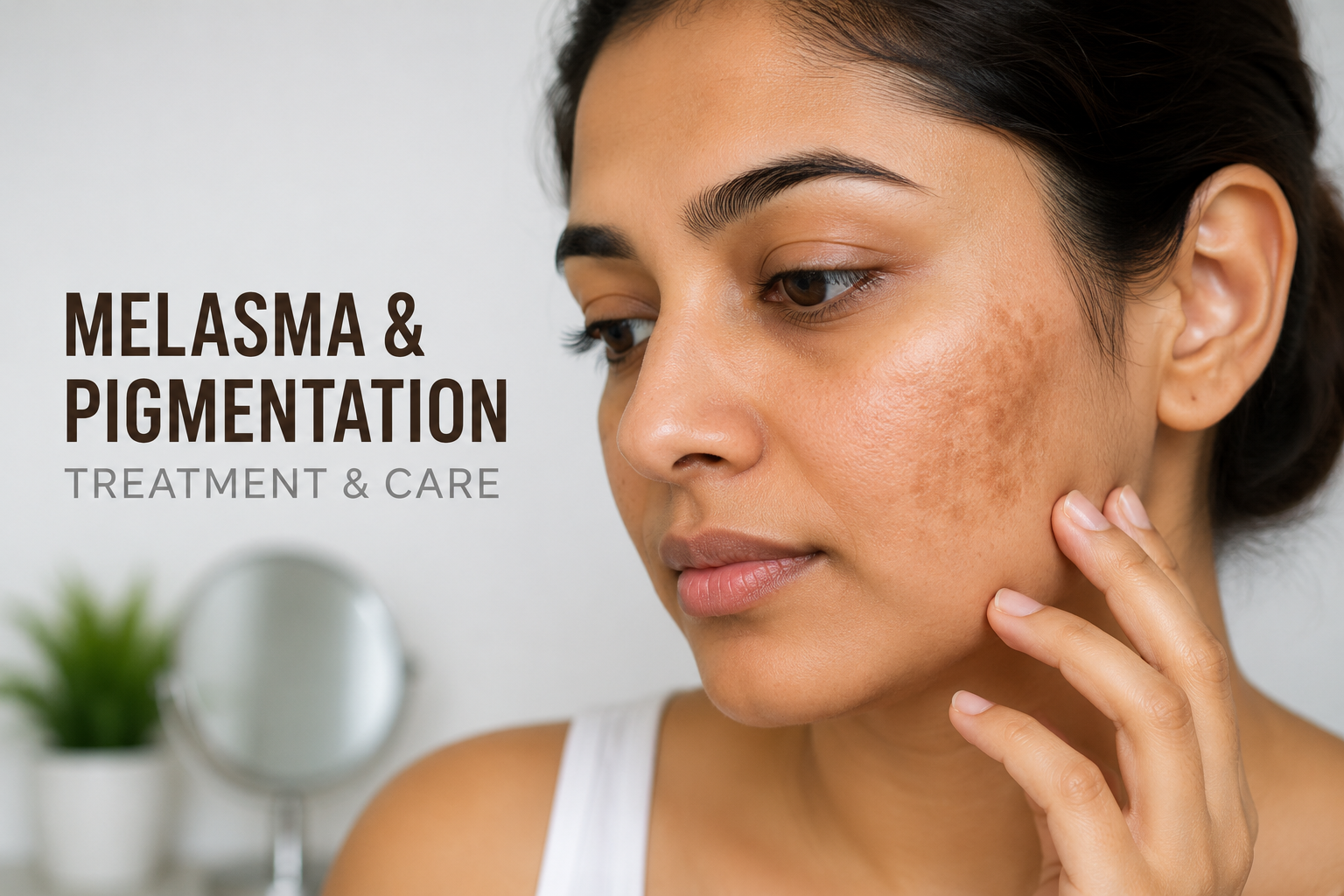
Melasma and hyperpigmentation are among the most common skin concerns affecting people with Indian skin tones. In Kolkata — where year-round humidity, heat, and UV exposure compound the problem — uneven skin tone is a leading reason patients consult a dermatologist in Kolkata.
This guide explains what melasma is, why Indian skin is more vulnerable, what triggers it, how it is clinically diagnosed, and which treatments are evidence-backed.
What Is Melasma?
Melasma is a form of hyperpigmentation characterised by symmetrical, brown or greyish-brown patches that develop on sun-exposed areas of the face — most commonly the cheeks, forehead, nose bridge, and upper lip.
It is driven primarily by two factors: hormonal fluctuations and UV exposure. It is more prevalent in women, particularly during pregnancy — which is why it is also called the "mask of pregnancy" — and in individuals with darker skin tones, including Indian skin types.
How Is Melasma Different from Other Pigmentation?
Not all dark patches are melasma. The distinction matters because each type responds to a different treatment protocol.
| Type | Cause | Appearance |
| Melasma | Hormonal + UV | Symmetrical patches, cheeks/forehead |
| Post-inflammatory hyperpigmentation (PIH) | Acne, injury, inflammation | Localised dark spots after skin trauma |
| Solar lentigines | Cumulative sun damage | Flat, well-defined spots |
| Periorbital pigmentation | Genetics, lifestyle | Darkness around the eyes |
| Drug-induced pigmentation | Long-term medications | Diffuse or localised darkening |
Why Is Indian Skin More Prone to Pigmentation?
Indian skin belongs to Fitzpatrick types III to V, which means it contains more active melanocytes — the cells responsible for melanin production.
More active melanocytes mean:
- Faster pigmentation response to triggers like sun, heat, and inflammation
- Deeper pigment deposition in the skin layers
- Higher risk of post-inflammatory hyperpigmentation after procedures or injury
- Longer time required for pigmentation to fade compared to lighter skin tones
This biological reality makes both diagnosis and treatment more nuanced for Indian skin — and why generic, one-size-fits-all protocols often fail.
What Triggers Melasma and Pigmentation?
The most clinically established triggers include:
- UV radiation — the primary accelerant of all pigmentation types; worsened in Kolkata's high-UV months from March to October
- Hormonal changes — pregnancy, oral contraceptives, thyroid dysfunction
- Heat and infrared radiation — including kitchen heat, outdoor commuting, and summer temperatures
- Physical friction — aggressive scrubbing, waxing, or over-exfoliation
- Topical steroid misuse — a widespread problem across India; steroid-based fairness creams cause severe rebound pigmentation with prolonged use
- Stress — cortisol dysregulation aggravates hormonally driven pigmentation
- Certain medications — antibiotics, anti-seizure drugs, and some chemotherapy agents
How Does a Dermatologist Diagnose Melasma?
A clinical diagnosis of melasma involves three key assessments:
1. Wood's Lamp Examination
A UV light that reveals whether pigmentation is epidermal (surface-level), dermal (deeper), or mixed. This is critical — dermal pigmentation responds very differently to treatment than epidermal pigmentation.
2. Dermatoscopy
Magnified skin evaluation that maps pigment distribution and rules out other dermatological conditions including lentigo maligna.
3. Medical and Hormonal History
A thorough review of contraceptive use, pregnancy history, current medications, thyroid function, and previous treatments attempted.
A good skin doctor in Kolkata will not prescribe treatment without completing this diagnostic sequence. Without knowing the depth and type of pigmentation, no protocol can deliver consistent results.
What Are the Evidence-Based Treatments for Melasma?
Melasma is manageable, not curable. Long-term control — not a one-time fix — is the realistic and honest treatment goal.
Topical Treatment Protocol
The clinical gold standard is a triple combination approach:
- Hydroquinone (2–4%) — the most studied melanin-inhibiting agent; used at physician-prescribed concentrations
- Tretinoin (0.025–0.05%) — accelerates epidermal cell turnover, helping pigmented cells shed faster
- Mild topical corticosteroid — reduces inflammation that can drive pigmentation
- Azelaic acid (10–20%) — gentler alternative; safe during pregnancy
- Adjunct ingredients — kojic acid, niacinamide, alpha-arbutin, and tranexamic acid in topical form
Broad-spectrum SPF 50+ sunscreen is non-negotiable. Without daily sun protection, no depigmenting agent can maintain its results.
In-Clinic Procedures
Indicated when topical treatments plateau:
- Chemical peels — lactic acid, glycolic acid, or Jessner's peels, dosed conservatively for Indian skin to avoid rebound PIH
- Q-switched Nd:YAG laser toning — targets dermal pigment with low downtime; must be performed at conservative settings for Fitzpatrick III–V
- Microneedling with depigmenting serums — enhances active ingredient penetration and stimulates collagen remodelling
- Tranexamic acid (oral or injectable) — emerging evidence showing strong efficacy in Asian skin types
Critical note on lasers: Aggressive laser settings on darker skin tones can paradoxically worsen pigmentation. This procedure must only be performed by a qualified skin doctor in Kolkata with specific experience in treating Indian skin.
What Does Not Work — and What Makes It Worse
These approaches are commonly attempted and consistently counterproductive:
- Lemon juice and DIY acids — uncontrolled acidity causes chemical burns and worsens PIH
- Steroid-based fairness creams — widely sold over the counter; cause skin thinning, steroid acne, and severe rebound darkening
- Inconsistent sunscreen use — the leading reason pigmentation treatments fail; UV exposure undoes depigmentation within days
- Frequent product switching — active ingredients require 8 to 12 weeks of consistent use before results are measurable
Does Pigmentation Return After Treatment?
Yes — particularly melasma, which has a strong recurrence tendency.
Recurrence is most common after:
- Pregnancy or hormonal changes
- Prolonged or unprotected sun exposure
- Discontinuation of maintenance therapy
Long-term management typically involves a lighter maintenance protocol continued indefinitely, with periodic in-clinic sessions as needed. Patients who treat pigmentation as an ongoing skin health practice — rather than a one-time course — maintain the best long-term results.
Your Skin Deserves Better Than Guesswork
Melasma and pigmentation in Indian skin are among the most undertreated and most mismanaged conditions in everyday dermatology. The gap is rarely in available treatments — it is in accurate diagnosis, skin-type-appropriate protocols, and the consistency to follow through.
Dr. Oindrila Dutta, one of the best skin doctors in Kolkata, brings a precise, evidence-based approach to pigmentation management — tailored specifically for Indian skin tones, calibrated for Kolkata's climate, and focused on long-term results over quick surface fixes.
Book your consultation with Dr. Oindrila Dutta today — because clear, healthy skin starts with the right diagnosis, not the next product on the shelf.
People Also Ask
Q1. Is melasma permanent?
Melasma is a chronic condition that can be effectively managed but rarely disappears permanently without ongoing care. With consistent sunscreen use, a physician-prescribed topical protocol, and periodic dermatologist supervision, most patients maintain significant long-term improvement. Recurrence is possible, particularly after pregnancy or sustained UV exposure.
Q2. Can melasma be treated safely during pregnancy?
Hydroquinone and tretinoin are not recommended during pregnancy. Azelaic acid and mineral-based SPF 50+ sunscreens are the safest options during this period. Always consult a dermatologist before starting, modifying, or discontinuing any skincare regimen during pregnancy.
Q3. Why did my pigmentation worsen after a salon facial?
Steam, aggressive exfoliation, and unregulated chemical products used in salon facials are direct triggers of post-inflammatory hyperpigmentation in Indian skin. Heat and friction stimulate melanocyte activity. Pigmentation-prone skin should not undergo any facial treatment without prior dermatologist clearance.
Q4. How long does it take to see results from pigmentation treatment?
Topical treatments require a minimum of 8 to 12 weeks of consistent daily use before visible improvement appears. In-clinic procedures may accelerate results, but multiple sessions are typically required. Consistency and sun protection matter more than the strength of any individual product.
Q5. Does sunscreen alone reduce existing dark patches?
Sunscreen prevents existing pigmentation from deepening and blocks new patches from forming, but it does not reverse established discolouration on its own. It must be combined with active depigmenting agents for measurable improvement. Without sunscreen, no treatment protocol will hold.
Ready to Transform Your Skin Health?
Take the first step towards a radiant, healthy skin with expert care from Dr. Oindrilla Dutta. Book your consultation today and discover personalized solutions for all your dermatological needs!

Recent Post
-
 10.08.2026
Does Melasma Get Worse During Monsoon?
-
-
 August 15,2026
Tried Everything for Dull Skin? Know What Exosomes Can Do