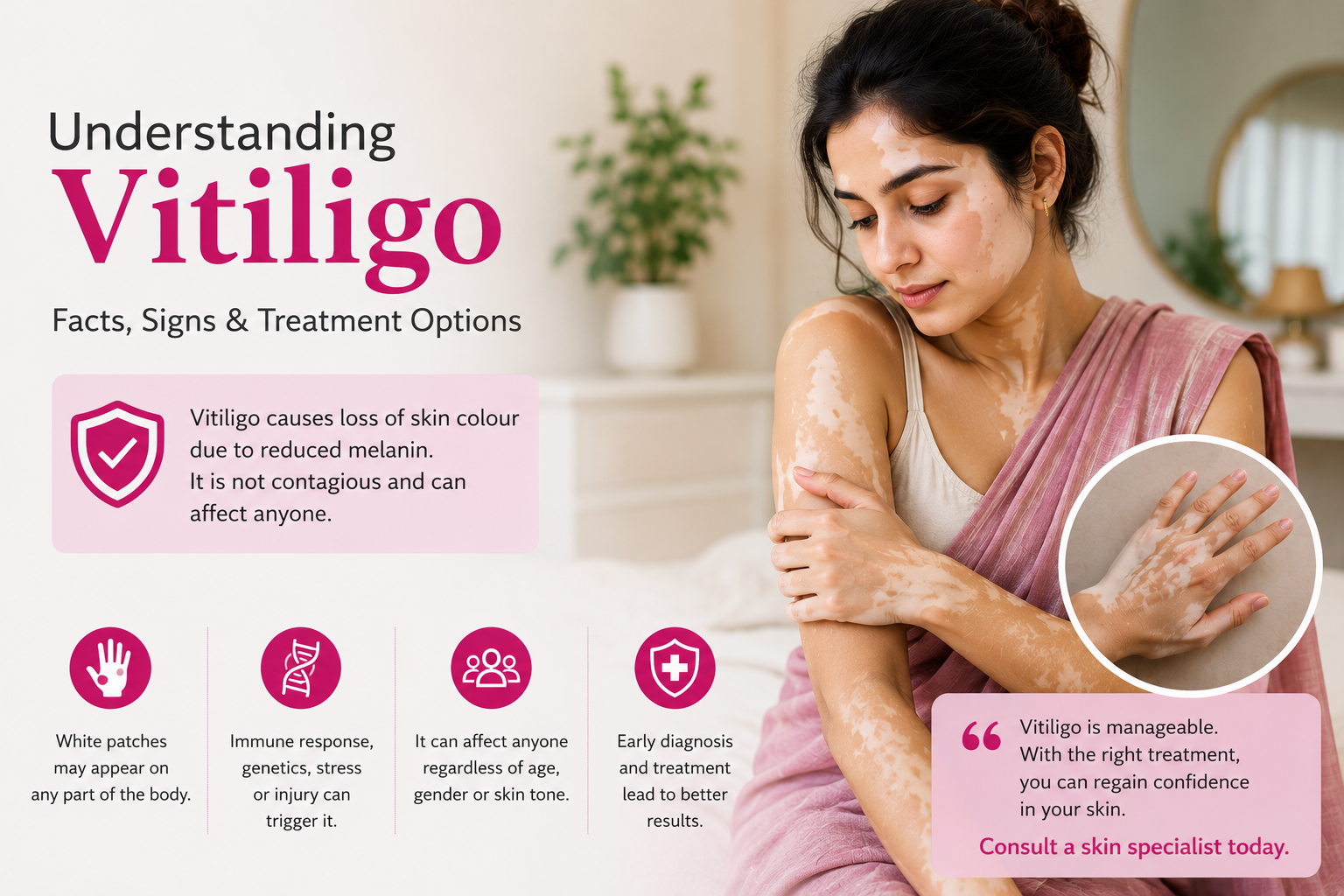
Noticing a white patch on your skin can be unsettling. Questions arrive quickly — will it spread, will it affect how I look, and can it actually be treated? The good news is that vitiligo is one of the most studied skin conditions today, and patients have more options than ever before. But the journey always starts the same way: not every white patch is vitiligo, and not every vitiligo patient needs surgery. The first step is always a proper diagnosis.
What Is Vitiligo?
Vitiligo is a skin condition where patches of skin lose their natural colour.
- It happens when the cells responsible for skin pigment (called melanocytes) stop working or get destroyed
- It is not contagious — you cannot catch it or pass it on through touch
- It can affect anyone, regardless of age, gender, or skin tone
- It is a medical condition, not a hygiene or lifestyle issue
Understanding this helps remove a lot of unnecessary fear and stigma around the condition.
What Are the Early Signs of Vitiligo?
Vitiligo often starts small and is easy to miss at first. Watch for:
- White or pale patches that stand out against the surrounding skin
- Patches commonly appearing around the mouth, eyes, fingers, or feet
- Premature whitening or greying of hair in the affected area
- Patches that slowly grow larger over weeks or months
- In some cases, patches appearing symmetrically on both sides of the body
If you notice any of these signs, it's worth getting it checked early rather than waiting to see if it goes away on its own.
What Causes Vitiligo?
There isn't one single cause, but a few factors are commonly linked:
- Immune system changes — the body's immune system can mistakenly affect pigment cells
- Family history — some patients have a genetic link, though not everyone with vitiligo has a family history of it
- Skin injury or sunburn — trauma to the skin can sometimes trigger new patches
- Stress — it may worsen how the condition feels emotionally, but it is not considered a primary cause
No one factor explains every case, which is why diagnosis should always come from a qualified skin specialist rather than self-assessment.
Can Vitiligo Spread?
This is one of the most common worries patients have, and the honest answer is: it depends.
- Some cases stay completely stable for years without any change
- Some cases spread slowly over time
- Active vitiligo (patches that are currently growing or new ones appearing) needs prompt medical attention
- Stable vitiligo (no new patches or growth for a long period) may be a better candidate for advanced treatment options, including surgical ones
This is exactly why an experienced skin specialist evaluates whether your vitiligo is active or stable before recommending any treatment path.
Is Vitiligo Treatable?
Yes — vitiligo can be treated, but the right approach depends on several individual factors:
- Size of the patches
- Location on the body (face and hands often need a different approach than less visible areas)
- Whether the vitiligo is currently active or stable
- How long you've had the condition
- Any previous treatments you've already tried
There is no single "best treatment" that works the same way for everyone. A proper skin specialist consultation maps out what's realistic for your specific case.
What are the Common Treatment Options for Vitiligo
Medical Creams
For early-stage or limited patches, topical creams are often the first line of treatment. These work best when started early and used consistently under medical guidance.
Light-Based Treatment
Certain light-based therapies may help stimulate the skin to produce pigment again. This is typically considered for patients with more widespread but stable patches.
Sun Protection
This step is often underestimated. Skin that has lost pigment is more vulnerable to sun damage and burns more easily.
- Daily sunscreen is essential, even on cloudy days
- Protective clothing helps reduce flare-ups in exposed areas
- Sun protection also helps prevent the contrast between patches and normal skin from becoming more visible
Vitiligo Surgery
For patients with stable vitiligo that hasn't responded well to creams or light therapy, surgical options such as melanocyte transplantation may be considered. This involves transferring healthy pigment cells to the affected area to help restore natural skin colour.
Vitiligo surgery in Kolkata has become a more accessible option for patients with long-standing, stable patches who are looking for a more definitive solution beyond topical or light-based treatments.
When Can Vitiligo Surgery Help?
Surgery isn't the starting point for every patient, and it isn't suitable for everyone either.
- Surgery is generally considered only for stable vitiligo, where patches haven't grown or changed for a meaningful period
- A dermatologist needs to assess the patch type, location, and stability before recommending this route
- The goal of surgery is to help restore pigmentation in carefully selected areas, not to guarantee identical skin tone everywhere
- It works best as part of a broader, personalised treatment plan rather than a standalone fix
Because outcomes depend heavily on case selection, this decision should always be made with a specialist who has experience evaluating vitiligo patients individually — not a one-size-fits-all approach.
When Should You See a Dermatologist?
It's easy to put off a consultation, especially if the patch seems small or painless. But certain signs call for prompt medical attention:
- New white patches have appeared on your skin
- Existing patches seem to be spreading or changing shape
- Patches are affecting visible areas like the face, lips, or hands
- You're feeling anxious or self-conscious about how your skin looks
- You simply want clarity on whether your condition is active or stable
Early evaluation by a qualified skin specialist in Kolkata gives you a clearer picture of your options and prevents unnecessary worry caused by guesswork.
Healing Starts with the Right Guidance
Vitiligo can feel overwhelming when you first notice it, but it's a manageable, well-understood condition with real treatment paths — from creams and light therapy to surgical options for stable, long-standing cases. The key is getting an accurate diagnosis early, rather than waiting or guessing.
If you've noticed new or spreading patches, don't wait for it to "settle on its own." Dr. Oindrila Dutta, a trusted skin specialist in Kolkata, offers personalised evaluation and advanced treatment options — including vitiligo surgery for eligible stable cases.
Book your consultation today and take the first confident step toward clearer, even-toned skin.
Frequently Asked Questions
1. Does vitiligo hurt or itch?
No, vitiligo patches are usually painless and don't itch. The main change you'll notice is in skin colour, not in how the skin feels.
2. Can diet cure vitiligo?
No food or diet can cure vitiligo on its own. Eating well supports overall skin health, but vitiligo needs proper medical evaluation and treatment, not just dietary changes.
3. Will the white patches ever go back to normal skin colour?
In some cases, yes — especially with early treatment. But results vary from person to person, and not every patch responds the same way, which is why a specialist assessment matters.
4. Is vitiligo the same as a fungal infection or ringworm?
No, they are completely different conditions. Fungal infections often come with itching, scaling, or a defined ring shape, while vitiligo patches are typically smooth and painless. A doctor can easily tell the difference on examination.
5. Can children get vitiligo too?
Yes, vitiligo can appear at any age, including childhood. It's not linked to anything the child did or was exposed to, and early evaluation helps in managing it better as they grow.
Ready to Transform Your Skin Health?
Take the first step towards a radiant, healthy skin with expert care from Dr. Oindrilla Dutta. Book your consultation today and discover personalized solutions for all your dermatological needs!

Recent Post
-
 October 07, 2026
Skin Looking Dull & Dehydrated? Know What Skin Boosters Can Do
-
 September 28, 2026
Why Does My Ingrown Toenail Keep Coming Back After Surgery?
-
 September 21, 2026
Not Every Raised Scar Is a Keloid: Know the Difference